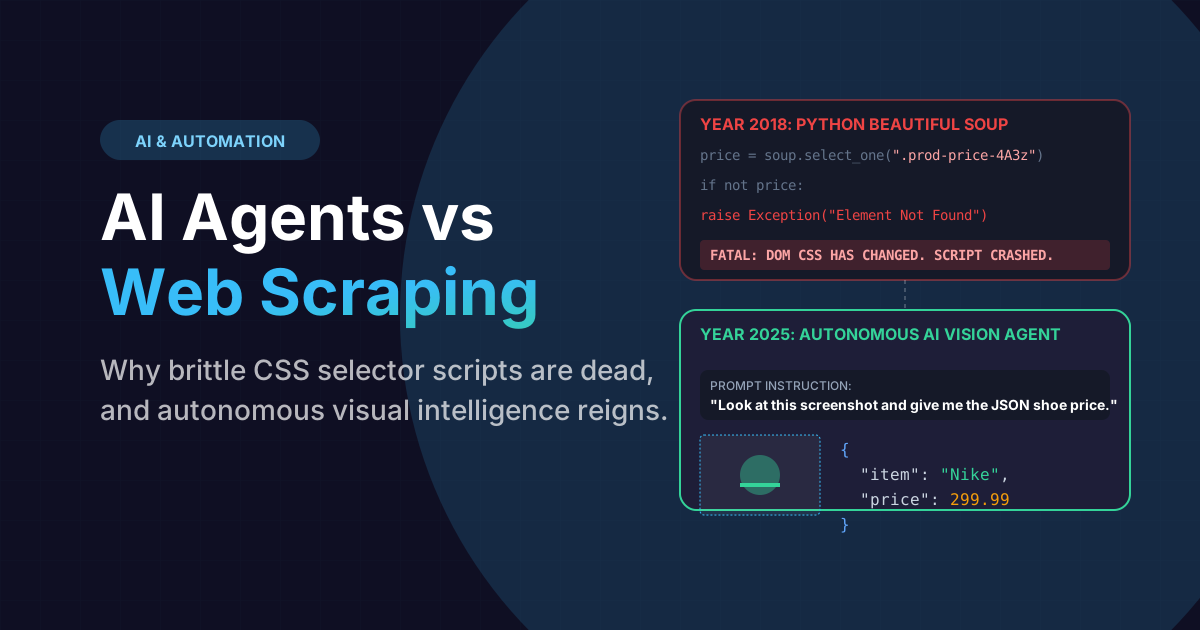
For two straight decades, attempting to extract data from a competitor's website meant hiring a junior Python engineer to write a BeautifulSoup or Selenium script. The developer had to manually open the Inspector network tab, find the exact `div` block holding the price tags, and lock onto a CSS variable like `.prod-price-4A3z.`
It was a brittle nightmare. If the competitor's frontend designer arbitrarily changed a CSS class name, your entire backend data pipeline instantly imploded. AI Agents have permanently exterminated this problem constraint.
The Extreme Brittleness of CSS Selectors
Traditional scraping targets explicit structural geography. A Python script is effectively blind. It doesn't know what a "Shopping Cart" or a "Price Tag" looks like. It only knows: "Fetch the text data stored inside the third child div of the header container."
Modern React and Next.js applications utilize dynamic class generation algorithms (like Tailwind JIT). Every time the website deploys an update, the target CSS classes actively mutate and change their names, explicitly designed to break your static scraping python bots.
How Vision AI Understands the DOM
Autonomous AI Agents functionally behave exactly like a real human. When you feed an LLM a massive block of raw HTML, or even screenshot pixels alongside a multimodal vision model, the AI performs a semantic analysis of the layout.
You no longer tell the bot to "Target div absolute path X." Instead, your prompt is: "Find all the men's shoe products on this page and extract their name, price, and manufacturer stock status." The AI looks at the page, visually identifies the text that strongly operates as a price (because it has a $ symbol and sits next to a shoe image), and rips it directly out, regardless of how the CSS classes are arranged.
Format AI output seamlessly
Large Language Models natively output raw JSON strings when extracting data. If you are piping AI outputs directly into your pipeline, use our syntax validator to ensure the agent didn't hallucinate a broken trailing comma.
Launch JSON Formatter & ValidatorBypassing Advanced CAPTCHAs
Traditional headless Chrome browsers are easily flagged by massive firewall services like Cloudflare. Why? Because they operate too mathematically perfectly. Humans pause, drift their cursor, and hesitate.
Modern AI agents driving advanced orchestration frameworks physically simulate human neurological chaos. The AI model actively clicks, scrolls dynamically off-axis, and solves complex image CAPTCHA grids directly via neural network vision models. AI is blurring the fundamental distinction between a Bot and a User interface connection.
Frequently Asked Questions
The legality of scraping remains highly fluid globally. Generally, scraping public data available on the open web is legal in the US following rulings like hiQ Labs v. LinkedIn. However, scraping data aggressively behind a firewall, stealing copyrighted journalism, or violating aggressive Terms of Service agreements enters severe legal gray areas.
Yes. A raw Python network request can scrape 100 pages a second. An AI agent using visual GUI manipulation might take 5 seconds to load, analyze, and parse a single page. AI is used for fragile, complex targets where flexibility is needed, not brute-force speed.
No, their role is simply elevating. Instead of writing brittle DOM parser logic loops, data engineers are now transitioning to orchestrating cloud autonomous swarms, building LLM prompt pipelines, and routing data APIs.