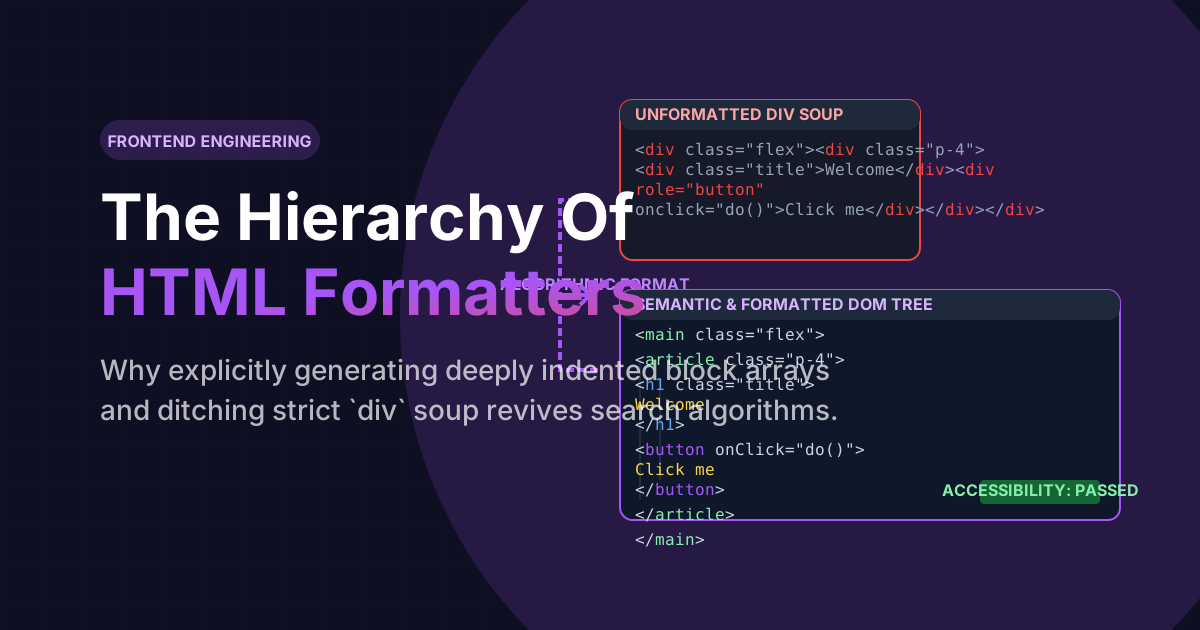
The Structural Superiority of Semantic HTML Formatter Trees
F
Footprint Team
Frontend Engineering
Since the explosive rise of React DOM logic arrays and Tailwind inline styling structures, the modern foundational HTML document has drastically devolved into a horrific, entirely unreadable algorithmic blob of generated strings.
When developers blindly compile unformatted nested element blocks heavily, they violently destroy critical Document Object Model (DOM) search indexing trees and actively obliterate vital accessibility logic physics globally required by screen readers.
The Horror of "Div Soup"
Because CSS explicitly allows styling absolutely any tag element, junior developers natively default solely to the `
` tag block. They architecturally structure entire site navigations via `
`, build entire textual articles exclusively natively in `
`, and create intricate footer bounds completely inside `
` chains.
When Google Googlebot violently rips through the raw unformatted DOM architecture array, it immediately encounters a massive wall of indistinguishable semantic void logic blocks. The algorithmic crawler physically has absolutely zero mathematical idea what array chunk contains the highest-ranking topical value organically.
Format Legacy DOM Node Arrays
Do not accidentally deploy completely broken, illegible overlapping DOM syntax nests. Rigidly explicitly format, deeply indent, and mechanically clean your nested block syntax trees utilizing our strict algorithmic compiler UI.